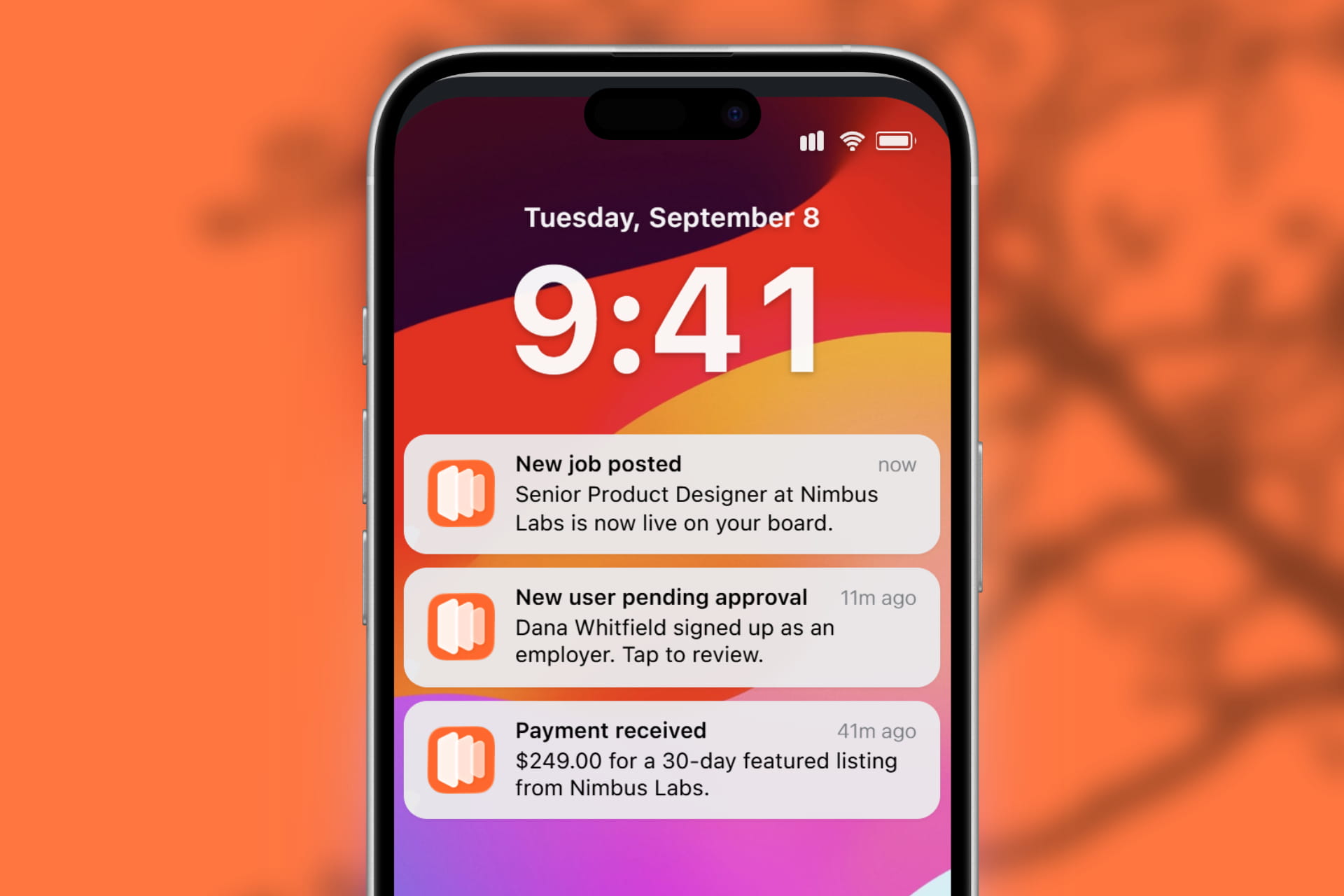
Job board software for publishers
Job listings paid for newspapers for a century, then moved to Indeed and LinkedIn. What did not move is the thing that made classifieds work: a local or specialist audience that employers cannot reach as cheaply anywhere else. A publisher that still has readers still has the half of a job board that is hardest to build.
From $79/month · 14-day free trial · No setup feesKardow is job board software built around that. You bring the audience and the businesses that already pay you. Kardow brings the board: your brand on your domain, jobs imported from day one so it is never empty, checkout or invoicing for the employers who post, and pages built to be found on Google and in AI search. Kardow takes 0% of what you sell.
Who runs a jobs section on Kardow
News sites and newspapers
A national or regional news site with daily traffic. The jobs section is a classifieds product again: employers pay per post or buy packages, and the board runs in the language your readers read.Local newsletters and city media
A newsletter or local media brand with a few thousand to fifty thousand readers in one town. Local businesses already sponsor the send, and a jobs page gives them a second thing to buy.Niche and trade media
A publication, review site or newsletter for one profession or industry. The board is where that industry hires, and the employers are often the companies that already advertise with you.Job posts are ad inventory you can sell every day
“Our readers come for the news. Will they use a jobs section?”
Some will not, and the model does not need them to. The board earns through the employer, who is buying reach into an audience you already have: your pages, your newsletter, your social posts.
The readers who do use it arrive two ways. From your own channels, through a jobs link in the navigation and a jobs block in the newsletter. And from search: every job carries Google for Jobs markup and every location and category gets its own page, so people looking for work in your area find the board without ever having read you. Those are new readers, not existing ones.
The one thing that kills a publisher board is an empty page. That is why jobs import on day one, filtered to your area or industry, before you have sold a single post.
Music Business Worldwide
A trade publisher that sells its jobs section as a real product. Every post, from $180, includes its weekly jobs email to 50,000 readers, longer runs cost more, and five-post bundles cost 20% less. The same shapes work at the scale of a city newsletter or a news site.The parts of Kardow that do this job
Your brand, on your domain
The board sits on jobs.yourpublication.com or under a path on your main site, in your colours and typefaces, with no platform badge on Pro and above. Readers see your jobs section, not a third-party site.Jobs from day one
Scheduled imports pull roles from careers sites and job feeds in over 100 countries, filtered by location and keyword, so the board is full before the first employer pays.Card, packages or invoice
Employers pay by card into your own Stripe account, buy packs of posts or a monthly plan, or, on Scale, post now and pay an invoice you send from your own accounting system. Kardow takes 0% of job sales on every plan.In the language your readers read
Six languages ship with every board: English, French, German, Spanish, Brazilian Portuguese and Albanian. With more than one turned on, each job is translated automatically and every language gets its own indexed pages.Built to be found
Google for Jobs markup on every listing, a page for every location and category, and a sitemap. The board brings search traffic to your brand instead of competing with it.Where Kardow is the wrong answer here
What people ask before they build one.
- How much can a publisher make from a jobs section?
- It depends on how many businesses already pay you and how specific your audience is, much more than on raw traffic. A local newsletter with regular sponsors can sell posts in its first week, because it is selling to people who already buy from it. A national news site sells volume, many posts at a modest price. Start by pricing against your own ad rates, then count how many of your current advertisers are hiring right now.
- Do we have to charge for job posts from the start?
- No. Many publishers open with a free board filled by imported jobs, then turn on paid posting once the board has visible inventory and a few employers have used it. Charging for posts is on every plan; packs, monthly plans and a paid tier for job seekers are on Pro and above.
- Can employers pay by invoice?
- Yes, on Scale. An employer posts the job, you bill them from your own accounting system, and marking the payment received publishes the job. Kardow does not produce the invoice document itself. Employers who can pay by card do so through your own Stripe account, in the currency you set on each plan.
- Can we move our existing jobs section to Kardow?
- Yes. Jobs, employers and accounts can be imported, and help moving comes with every plan. Old job URLs are not redirected, so the new board is indexed fresh; Kardow submits its sitemap and pushes new job URLs to Google, which shortens that gap.